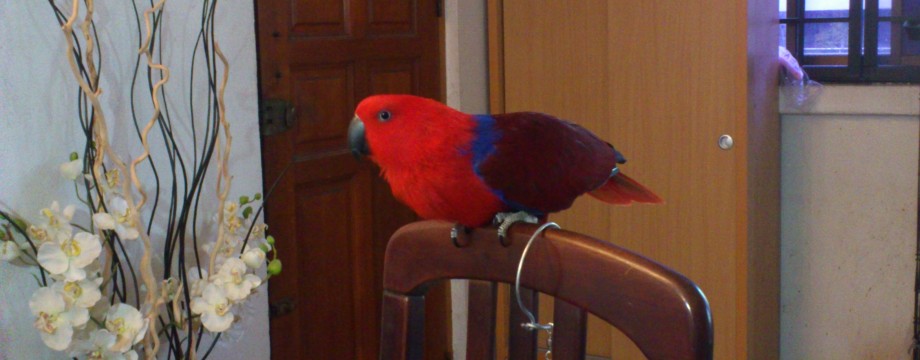
Breeding

Breeding: An Experience With The Congo African Grey

My first medium-sized parrot was a Congo African Grey. It was a plucker, but being a kid and and totally clueless about bigger birds (only had budgies, lovebirds and cockatiels) my sister and I thought that it was a young bird. When we realised, we returned it back to the shop.

I did not keep another Grey until many years later in  2013. Since then I’ve had one more single bird, another youngster in 2014.

In this article I will write about my experience with propagating Greys. The usual disclaimer, in a local context only and that what worked for me may not work for you.


I acquired my first pair of wild-caught Greys from my mentor in the end parts of 2014. After hearing about him giving up most of his flock, a friend and me descended upon his dwellings and took over 3 proven Grey pairs and 2 proven Sun conure pairs. Later I would take over my first proven pair of Eclectus.

I consider myself very fortunate to be able to start with proven pairs and that they are true breeding pairs. Many hobbyists have no access to proven pairs. My friend and I had no proof that the birds are breeding pairs except for the oldest pair that had a few days’ old chick in the box. All that we had was my relationship with my mentor.

My mentor kept all his Greys in divided 3ft (90cm) cages. That would make it a 2ft x 1.5ft x 2ft height space for each pair. He did not like people taking photos, understandably. So this is my best replication of his setup.
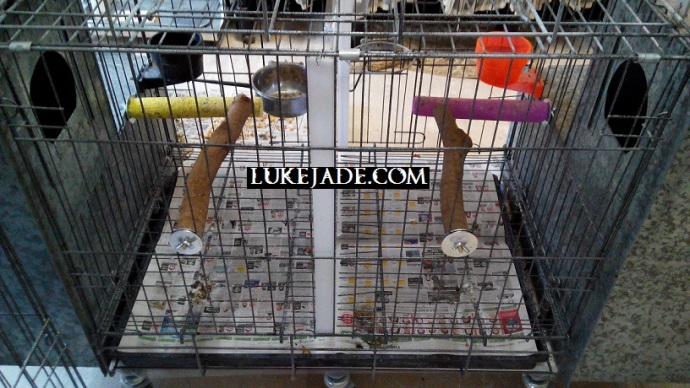
3ftcage

It may look big in the photo but it is actually very cramped. I put my Greys in a 3ft cage by themselves with a DIY’ed nestbox. I purposefully made the hole tiny so they would have to chew their way in as I had read that it would encourage hormones. Within a month they had chewed a hole big enough for them to enter the box.


Never underestimate the power and perseverance of a Grey. That wood was 8mm thick.

There was no further progress and after it became apparent that they did not use much cage space I downgraded them to a 2.5ft (75cm) cage.
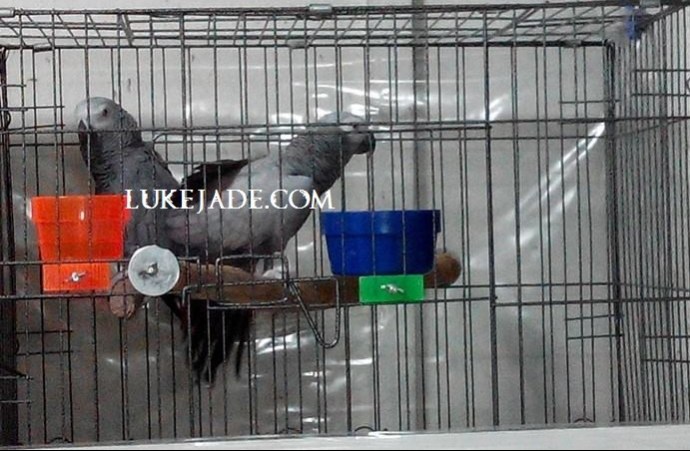
Squeaky2

I talk to my birds whether they are tame or not when I change their papers and feed them. This is quite important, I feel, to let birds settle down and get used to you. Within 4 months they felt comfortable enough to hang around me.

Stretching one is the female. I named her Squeaky because of the squeaking noises she made and adored her because she was the calmer of the two.

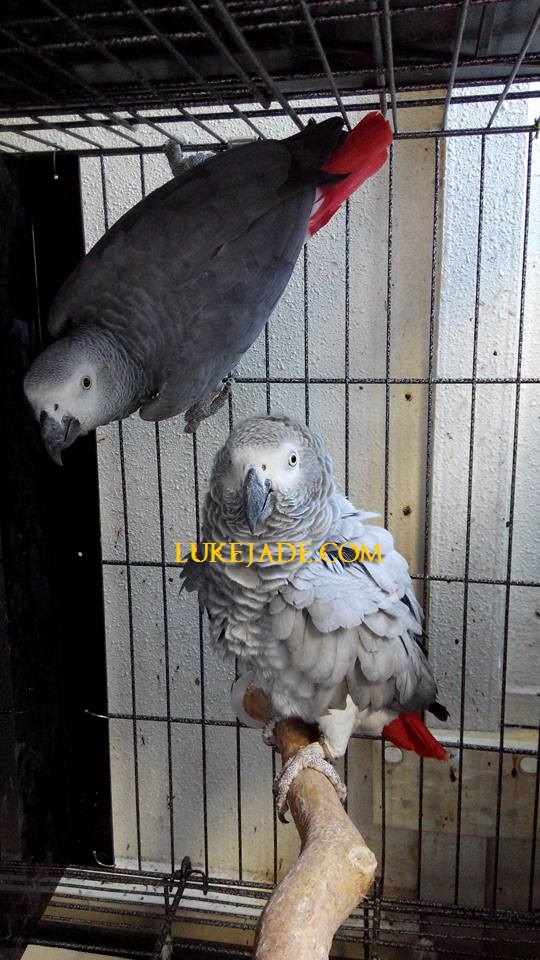
Most female Greys are a lighter colour than the male. Their heads are also rounder and less eagle-like than males. Male Greys also tend to be more fearful and usually the first to growl when you approach the cage. There are exceptions of course.

Shortly after, one night at 1AM (I was a darn late sleeper) I heard some wheezing noises from the Greys. I watched the two of them and observed for the first time the pair mate.
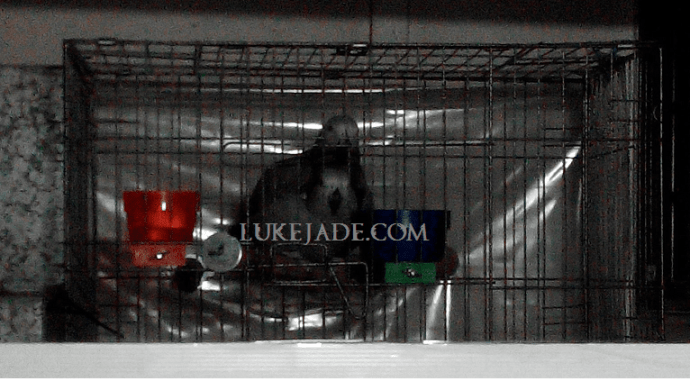
squeaky3

By then I had swapped to a metal L-shaped nestbox. I think it’s quite an honour that two wild-caught birds would feel at ease enough to initiate mating in my presence. They continued mating for the next week or so (always after midnight) but to my disappointment they did not lay.

I acquired a second pair of proven Greys (it was the older of the other 2 pairs that my friend got from my mentor), put them in the same setup and a few months later seeing no further progress, decided perhaps maybe I should try to replicate my mentor.
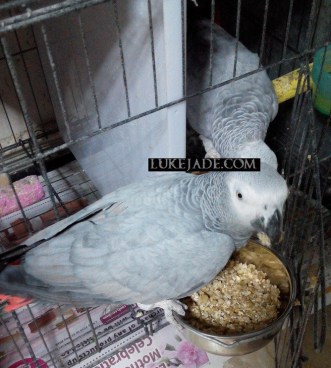
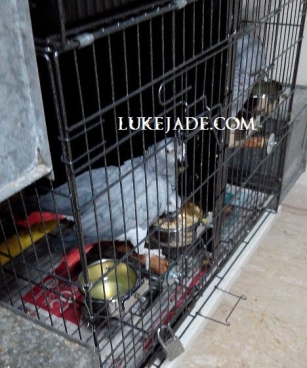
3ftcage2  IMG_20150806_220009

Both female Greys eating from separate bowls. Yep, that is how semi-tame Squeaky in the foreground became. I really liked her.

You can see my favourite Polly’s perch in each side. The acrylic divider was custom sized. If you look closer you will see that I actually cut the bottom grill as well, if not the birds would make a mountain of shit on a normal spaced grill. I am very fond of modifying cages and things to my liking. This is one part about breeding I enjoy. There is no such thing as impossible or cannot, you simply find a way around a problem if it is not the birds. I cut the nestbox holes myself amongst other things.

I still saw no progress with that setup, and there was the odd case of horrible blood splatter and pool on the tray (which I shall not share with you the photos) and surroundings but I could find no visible injury… and that setup was very dark for both pairs of Greys. I just did not like it because it was cruel and furthermore it was extremely dirty, even if my mentor had somehow succeeded with all his pairs in that type of setup.

The older pair of Greys (I was told they were over 40 years) were insanely dusty – from age, my mentor said – and despite being in that small a space liked to flap and blew the dust all over. They also took a long time to settle down as compared to Squeaky and partner and after a while I decided to give them up. If I could describe to you the dust…

In 2015 a friend of mine took over Squeaky and mate. I don’t recall exactly the circumstances of why but to cut a long tale short (and I’ve been quite generous so far) I reacquired them back early 2016. This time I decided to cover them up. But I thought on it, the Greys would chew on blankets and it was not safe…so I spent a bit of coin and customed many pieces of black acrylic and covered up the cage.

I don’t have a photo but it was darker than when the two Grey pairs were in the 3ft cage. I was concerned for their eyes given the lack of light but decided to just give it a shot. Within a 3 month span they had laid for the first time since out of my mentor’s hands and the 2 of 3 eggs were fertile.

I need to add in here that I artificially incubated most of my eggs for a long time. That was due to a crack in my first Eclectus egg and fearing more just decided to incubate any eggs that followed. I will write a little about incubation and assisted hatching in future.

Both eggs hatched but I lost one due to being overanxious assisting one of them.

I sunned the Greys daily after their first clutch with me. With every successful clutch I slowly began removing the black acrylic pieces to the point whereby they still produced without being covered at all.


In early 2017 I acquired another proven pair of Greys. This was strictly through a trusted friend recommendation, that his friend – a highly reputable breeder – was giving them up. The birds were young, female about 10 or so years old. They had produced before but for some reason stopped a few years back. I was confident that with appropriate privacy they would breed again, just a matter of time.

The female was an ex-pet. I did not think much of it for she was panicking and acting like a wild bird when the breeder caught them out of their cage. You can see my setup below for the two pairs. Squeaky below and the new pair on top. I considered moving Squeaky on top but since she was already producing I did not want to break that cycle.
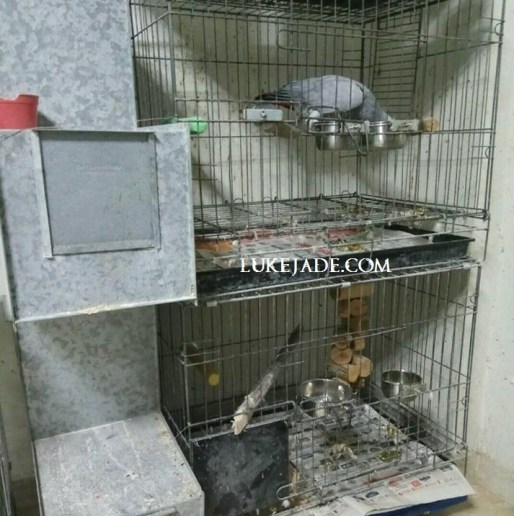
42622650_10156658424156303_1365241245789585408_n.jpg

You can see one acrylic panel remaining. The lone female eating is the ex-pet. And inevitably I started talking to that new pair and one day I decided to see if the female would let me touch her beak since she was always outside the box when I was present.

Things progressed real quick –
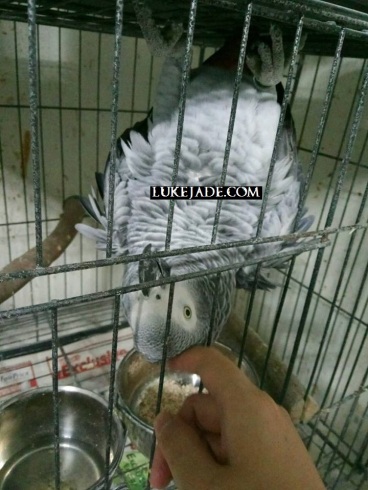
42608000_10156658424046303_6901229789961519104_n.jpg

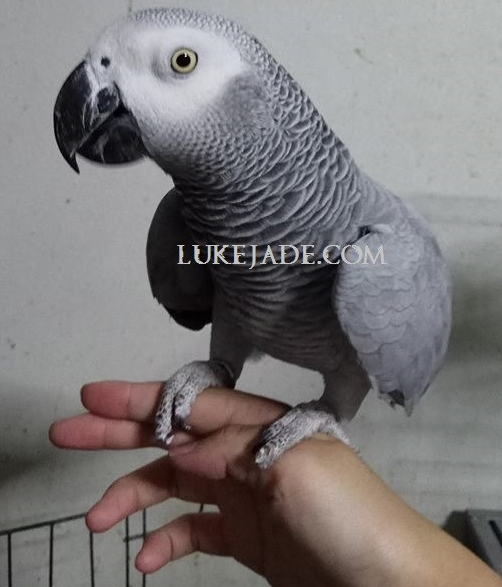
I admit I may have made a mistake here. One thing led to another –
42730847_10156658423866303_7734854835849134080_n 42661575_10156658423551303_6953811790371225600_n.jpg

Before long I was playing with her and she became more interested in interacting with me than her mate. I saw the male try to initiate mating but she saw me watching them across the room and was not keen on his advances.

Tame birds are noisier and so was this one. Every evening she would be twice as vocal as the rest as I cleared up the papers and I had – probably still do – a habit of sniffing tame birds. It was not long before I was sneezing quite badly (I have a chronic sinus problem since young). Coupled with the female’s disinterest in her mate and her exiting the box every time she heard me I realised my mistake.

In the later part of 2017 another friend who had bought the other pair of Greys from my friend (who could not wait for either pair to breed) who bought from my mentor wanted to give them up. They had bred in his hands after a year of waiting and quite steadily. I knew those birds were a true proven pair and decided to give up this tame female and her mate to acquire that pair. While that pair was used to human presence, my friend had not interacted with them. They were almost like Squeaky except that the male was the braver one.

theotherpair.jpg

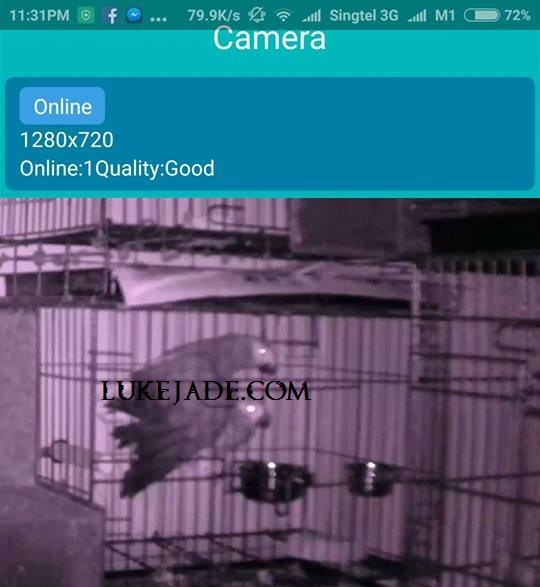
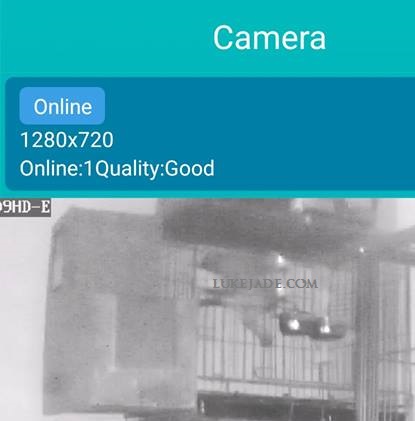
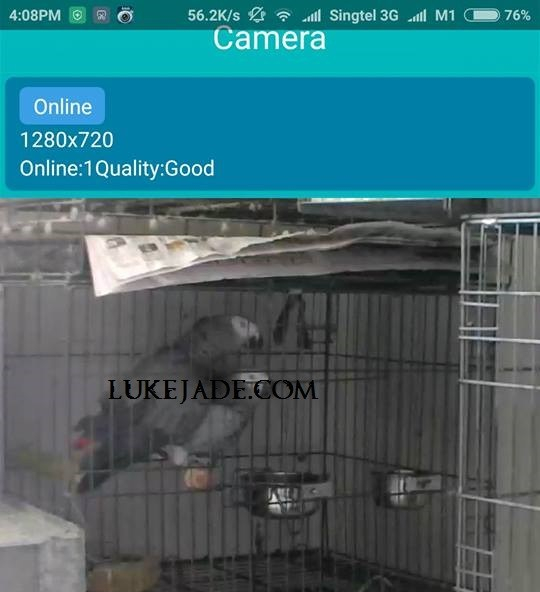
You can see I used a webcam or CCTV. This I feel is a necessity. Observation is critical to success.

The new pair’s female was very dark grey. It is best not to rely on colour alone to sex a Grey.

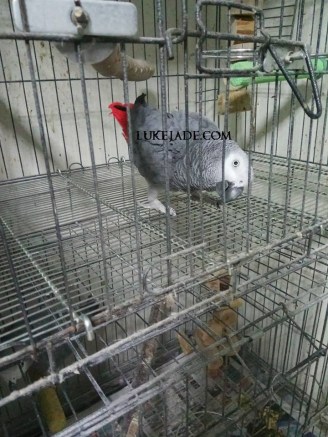
The male being braver, would stand on the outside until I entered the room and then he would slink into the box and hover at the entrance inside. I continued talking to them and during changing of papers purposefully waited to put the tray back in so he would see Squeaky and mate below to learn that I was not to be feared. And boy, he hated the other male! The previous pair of tame female + wild male, had no reaction to Squeaky and mate. I suppose this wild-caught male was also an alpha.

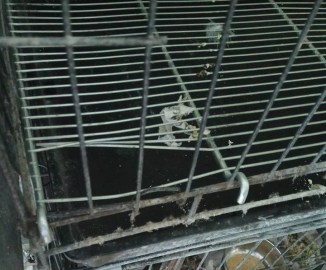
The new male’s despise of Squeaky’s mate was greater than his wary of me and soon he was hanging at the bottom hammering at the grill trying to get to the other male. He broke many grills, quite a shocking thing. Black coated, hammer spray, chrome did not withstand his beak so you can imagine how large he is.
grate.jpg 42677112_10156658472526303_1496509903215263744_n

You can see him looking at the other male at the bottom. Sometimes the male at the bottom would hang upside down and they would try to get at each other.

This fight for dominance led to Squeaky and mate going through their laying cycle faster. I noticed a marked reduction in time in between clutches. There was a catch though, initially only 1 of 3 eggs were fertile. I presume that whenever one of them mated, the other pair was led into believing that mating had taken place and thus laid without sufficient mating. Later when they had more or less sorted themselves out, it was back to 3 of 3 fertile for Squeaky and mate.

The second pair produced a clutch with fertile eggs end 2017. By then I was reluctant to incubate since Grey eggs did not see equal success as Eclectus being incubated and did not incubate them. Unfortunately they did not hatch and I believe it may have to do with the female laying 4 eggs and unable to sit on all of them at once.


In early 2018 I passed my Greys to a trusted friend. If there was one regret, it was letting go the very dusty pair. Granted they were twice as dusty but on hindsight if I had held on longer I might have seen success. The owner after me also did not wait and sold them as a bonded pair – a great loss!

The most important I have learned from these Greys – they need privacy. I had Squeaky and mate in a bird room but they did not breed until covered up which also helped them settle down further. In another case, a friend had a pair of Greys that mated continuously but did not lay for months. When he gave them up, the new owner – also a friend – put them in a bird room whereby there was no human presence (less than mine anyway) and that pair swiftly laid twice.

Greys are also very fond of routine. If I switched off the lights any later than 9PM they would start complaining and making noise until it was dark.

I did use supplements, Nekton S and E combined along with Calcivet. The Nekton as mentioned previously seemed to have no effect on the already-proven birds.

Diet-wise I gave them Zupreem Avianbreeder pellets. I used Cockatiel (M) size to save on wastage. Twice or thrice a week they also ate Maqnum mixed parrot seed. If you buy that in bulk 20kg bags it is more cost-saving than kg by kg as breeding Greys eat a lot. In the daytime I fed vegetable chop but most of them preferred to ignore it (unless it was beans and corn) and wait til pellet time in the evening. When they had chicks I added eggfood and a large amount of sprouts. The birds also received oil palm seeds twice a week.

For the chicks, I used Zupreem Embrace handfeeding formula. Unfortunate this is no longer being produced. I pulled them at 3 weeks, any later made for noisy and fearful chicks for a longer time.

Do take note that Greys do make sounds at dawn and dusk. These include loud cackles, pops and whistles. They also whistle at late night when everyone is asleep! With the CCTV I was able to see a pattern in the Greys’ mating – it was always after 11pm, sometimes it was 1-3AM and these are usually accompanied by whistling. Rarely they mated in the day. But otherwise Greys are quiet – unless yours is tame – and that makes them nice to breed as compared to other species of equal size.

Grey price, be it wild or tame has shot up. Wild birds now cost almost as much as tame ones as people rush to buy them for breeding.

Pairing two single wild greys. I have not had the opportunity to pair up single Greys but I have watched friends try. One in particular was a proven bird but had lost his partner. For a month he was without a mate and when introduced to a new one, quickly bonded. Greys will not go so far as to kill each other like Eclectus might.

Why I chose not to pair up single Greys is because unless one is very certain of the bird’s age you could end up with a 4 year old bird instead of a mature one. Then the wait is uncertain and most of the time very long. The eye of a 4 year old is similar to a 6 year old and the risks are there. I also did not pick up the skill of visually sexing Greys until later and to procure non-DNA birds and risk them being of the same gender was not worth it.


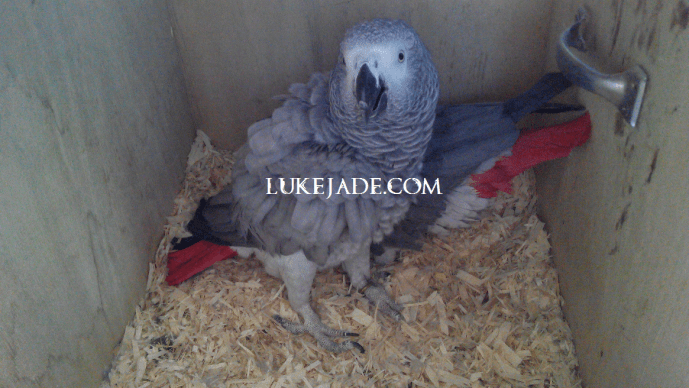
Some photos of the Grey pairs to show contrast in colour in sexes for most birds:

One thing that amused me to no end and gained my admiration was how creative my mentor was. Here are the Greys I got, look what he used for a ladder in the nestbox. That is the nice thing about breeding, it makes one think out of the box.

Squeaky in the front and male behind.
Squeaky1


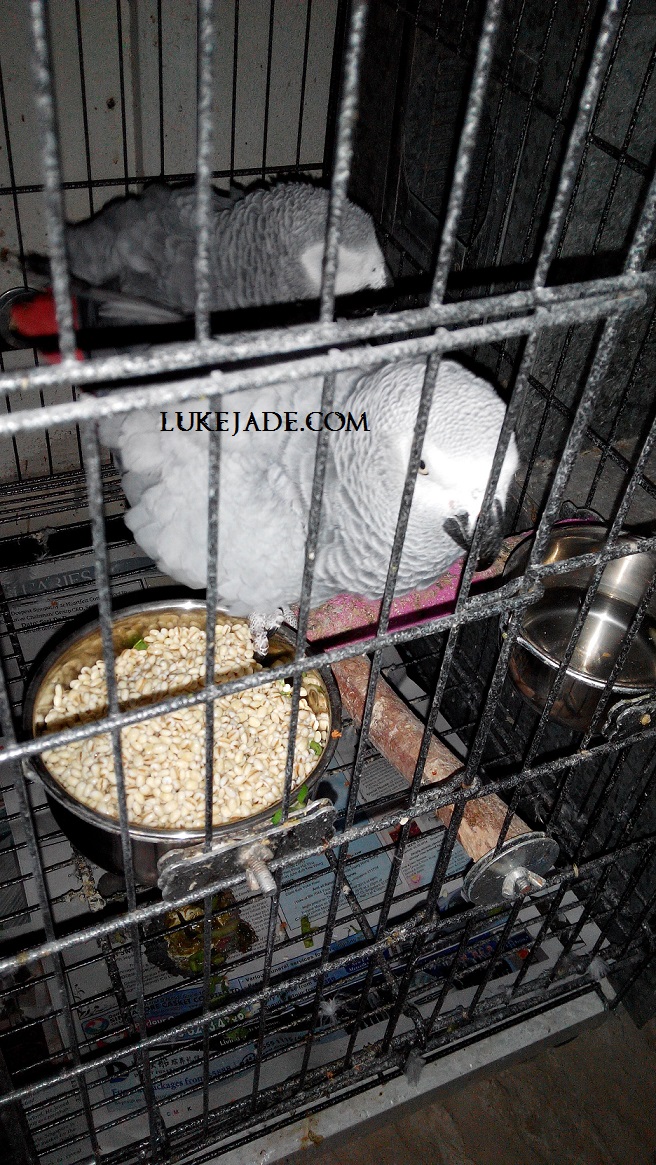
Squeaky in the front and male in the back. That is barley which they didn’t eat.
IMG_20151001_215028


The purportedly 40-year old pair. Female at the front and male in the back.
11896142_10153566241866303_114311354615523552_n


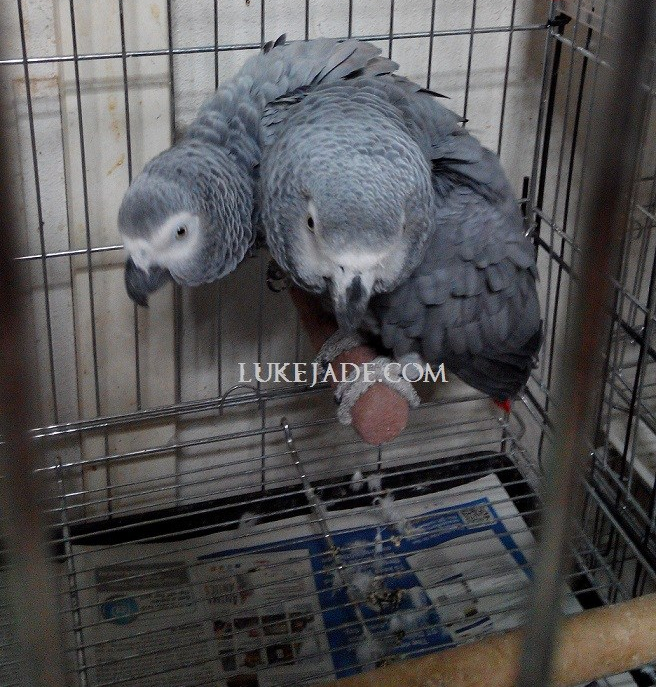
Squeaky and mate. Male is in the front. His blocky head shape is very obvious here. I haven’t been able to get decent head photos because they don’t sit still long enough.
img_20141218_214228.jpg

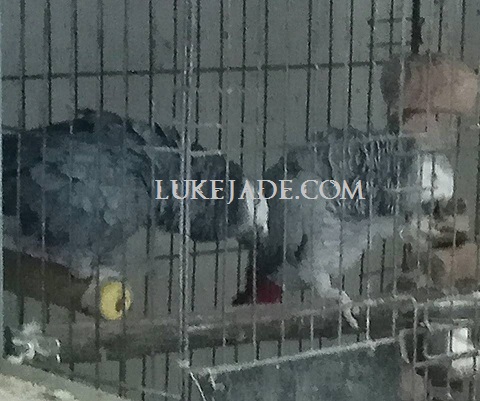
Male on left and Squeaky on right. You can see I gave them toys in the end. It is not true that toys will distract birds from breeding.
42701237_10156660859996303_5123440185018679296_n

Squeaky on the left and male on the right.
42453323_10156651791691303_5371151405908230144_n


If anyone you are buying a so-called proven pair from does not have tons of photos of the pair with chicks then you should run. There are also photo-stealers so do watch out! Videos work best. Regretfully I have some issue uploading videos from my phone so I can’t show you any.

Squeaky mating in the day.
42683441_10156660768636303_4544053365985771520_n

And in the night.

42855049_10156660768201303_7984108065962065920_n.jpg

The last pair I acquired, mating in the day.
42835098_10156660775396303_8935022342216613888_n

And at night.

42709141_10156660774116303_2278765443730636800_n

I have plenty of chick photos, but the Internet is filled with them too. More often than not I see individuals and shops – in particular – either state their birds as younger or older than they really are. Some shops are so ignorant (Google is everywhere man!) that they recommend too little handfeeds or too much for a young bird. I have seen more dead birds from shops than breeders. It is always better to buy from a breeder than shop but do your research first. There are good and bad breeders.

~

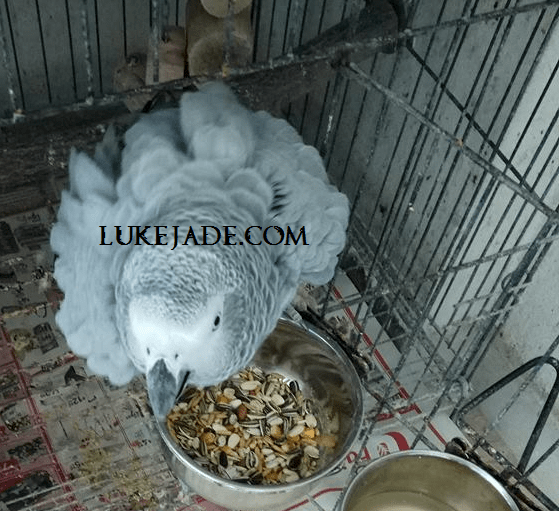
Squeaky and a bowl of Maqnum mixed parrot seeds. This particular bird touched some deep part of my soul that no other Grey did. Towards the end of her time with me she became very bold and would clamber out of her cage or just stand at the door as per the photo. I’m quite sure she knew that I was exasperated but kept going on purpose.
squeaky and seed


An end.

I do not think I have written as well as I wanted to. This is my second attempt actually. But I promised a friend I would get this out in a few days and furthermore beginning October I won’t have the time to write. I am sure there are a few disappointed readers who may have wanted to find out more about pairing single Greys or success from scratch. All the Greys from my mentor were paired up by him, he did not buy proven pairs. And they all bred for him even the many other Grey pairs he had before these.

Nonetheless this is my experience and again I say I am very fortunate that my mentor did not cheat me. If you’re wondering how much I spent in total:

$2500 + $2500 + $ 2700 + $4000

The price of a true proven pair can go very high as you can see. In fact I would say that there is no ‘average’ price for a proven pair of birds. The owner sets what he deems the birds to be valued at. Some people tell me I’m crazy to spend $4000 but if ascertained to be truly proven, the chance of recovering that amount is a lot higher and faster than if I were to get only bonded. You can call it an investment if you like. For me I simply prefer to buy with confidence.

The key to breeding these birds is patience and let me repeat, privacy. Many many people give up because they cannot wait or afford to feed a whole year or years. If your birds are already mating but not laying you are on the cusp of success. They just need more privacy if they aren’t excessively old. If your birds are laying but infertile eggs you need a CCTV to see what is happening.

Did I consider the 40-year old pair to be old? Well, they still produced a healthy 3 eggs right up to the point of procurement by my friend. I did witness another friend’s older pair of perhaps 60 or so years birds that only laid one egg in one year but the environment could have been improved…

Recommended cage size: 2.5ft or 75cm. Does nestbox shape matter: They bred in normal tower boxes for my mentor, and L shape for me.

~

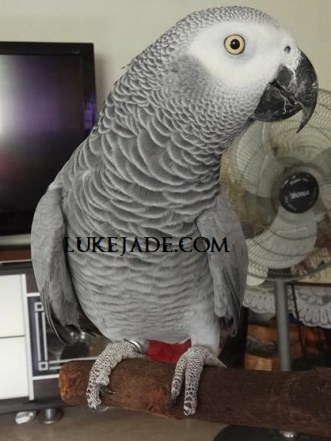
The Grey in the featured photo is Squeaky. That’s the time she first climbed out while I was feeding the Greys and sat there waiting. She is fully flighted and I never clipped her. I had to bribe her to go back into the cage. A naughty bird and full of character.
Categories: Breeding | 2 Comments

Breeding: A Detailed Overview


Updated 12th May 2020


I considered long and hard before penning this one. Several times I’ve tried writing only to discourage myself but lest my experience and memories slip away with time, I’m going to make an effort.

As usual, in a local context. This is darn important so do remember that. Also that this is my experience and opinion.

This article covers the popular species, items you will require on hand and being cautious in just about everything.


The first and foremost important thing regarding breeding is that you tell few of it. This is tricky considering we have many friends and relatives. I cannot stress how important it is that you do not trumpet to the whole world that you are entering the breeding scene. The bird community is small, if one person knows sooner or later everyone knows.

Regretfully the world – even locally – lumps avian breeders in the same category as puppy mills and farms. Breeding? You’re a crap person, greedy and only thinking about profit. You can have plenty of big cages and the best food, toys that money can buy but the stigma remains.

Of late there has been a greater clampdown on breeding and selling activity. Not just in the avian world, but also aquatics, small animals such as hamsters and so forth. I am confounded that betta fish hobbyists are being called up for fish that are worth a couple of dollars.

Pay heed to my warning, please.


What species to breed? Whether you’re in it purely for money – and I will not judge you if you do it responsibly – or desire to produce more of a favoured species one must consider the limitations of our dwellings.

Presumably you live in an apartment because most of us do. In that case most of the louder species such as cockatoos, larger Amazons and certain conures (Patagonian, Golden or even perhaps Sun conures are out.

The most popular species being propagated: (at time of post)

  1. Congo African Grey
  2. Conure (any common type but Green Cheeked)
  3. Nicer colour mutations of lovebirds
  4. Cockatiels

Ever since the Congo African Grey (CAG) became CITES 1, prices shot through the roof. Year after year even before this came to effect the price went up by $100. At this point of writing it is $1200 in shops. CAGs are valuable (average of 3 eggs) and quietest of all the medium-sized species which adds into their desirability (to be bred) and being touted as the best talking parrot puts it at evergreen demand.

Conures are prolific breeders and one clutch can easily net a value of over $1000. Most of them are also within the quieter range except for the Sun conures. Sun conures command the highest price amongst the cheaper / easily available types at $350 (average) and are considered entry level birds for free-flight beginners. Green-cheeked conure value has declined considerably and given the lackluster colour many hobbyists prefer to shell out a little more money for a Yellow-Sided or Pineapple.

Of late beautiful opaline blue and variating mutations of peachfaced lovebirds have been popping up in the market. Easily sold for $150 on average and having a clutch of 5 eggs whilst taking up very little space as compared to other species they are a choice starter bird for folks looking to understand more about life cycles. Sadly, other common lovebirds such as Peachfaced Greens or Peachface Olives are devalued so badly that nobody is willing to pay more than $50 for one. Coupled with people dumping tons of common-coloured chicks 2 years ago at $40, these ‘default’ colours are not being loved.

Cockatiels are prolific producers too and pairs egg each other on to produce together. A plus is they can even produce in a colony although I do not know anyone locally who has tried. Cockatiels are good starter birds (I believe that ‘starter’ birds exist, after all the years of experience) for new hobbyists and their tameness together with males’ ability to whistle endearingly are still popular and maintained value over the years.


The stuff you’ll need: 


  1. Liquid calcium
  2. Spark liquid
  3. Vitamin supplements (various brands except Baxter acceptable)
  4. Mite solutions
  5. Polly’s concrete perches (very important)
  6. First aid items
  7. Wooden toys


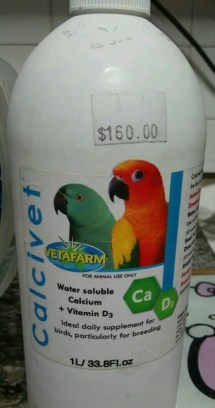
Calcivet


Liquid calcium is for hens. A cuttlebone does not work unless the birds are frequently exposed to sunlight. Also that the absorption of calcium is faster via liquid than food means. I see many people just give cuttlebones and sometimes their birds end up with problems. How many of us have the time to daily sun our birds? I favour Vetafarm’s Calcivet. I have tried Nekton MSA but as it is food-based (ie sprinkle on food) some birds just refuse to eat or eat less.

What about full spectrum lighting? I am not a fan of it because of the risks. Any closer than 2ft and the birds could go blind, yet any further it would be useless.


Spark


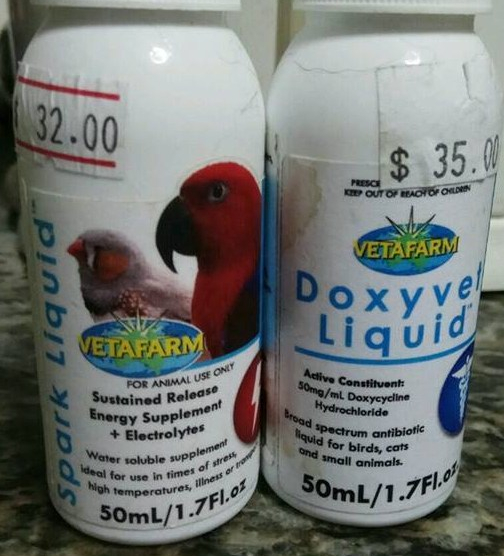
Spark by Vetafarm is an electrolyte and only reserved for weak chicks after hatching or if a hen is very tired after a bout of egg-laying or chick-rearing. This is for emergency use and is good to have on hand. It works more potently on sick or birds refusing to eat properly than a large amount of coconut water. The Doxyvet I have only used once and prefer to have it on standby lest it is ever required. I have seen birds die from overdose so unless you know what you are doing, skip that.


Vitamin supplements or breeding supplements. I have mixed feelings with regards to these as I have found that certain species do not need it (Eclectus in particular are intolerant of too much vitamins and by default quite horny) but if your pair is of age and not mating as much as they should at their age and if everything else is cleared (health, diet and environment etc) then you may consider using these. I don’t use them anymore. I have tried SELCEN-e liquid Fertility Enhancer and it seemed to only work on smaller birds. Nekton E and S together did not seem to do very much for larger birds that were already producing. Avitec’s Avigra (no longer produced) seemed to have zero effect and I could say the same for Versele-Laga. Remember that each pair is different and you may need to do some experimenting to find out what suits yours best.


42386883_10156647099526303_4733770167463444480_n


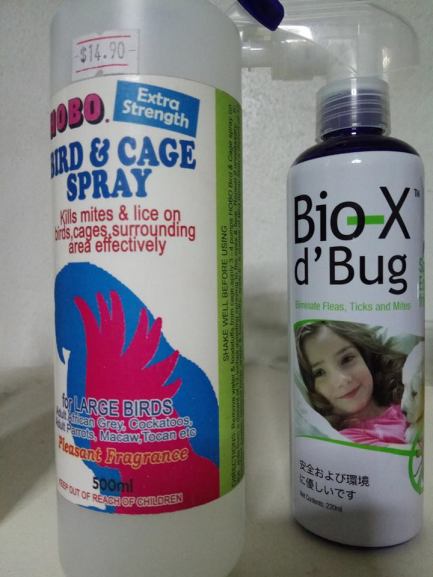
A good mite solution is needed if mites are present. In our humid climate a large percentage of birds/nestboxes have mites (*especially wood mites!!*) and I can call it inevitable unless your birds are very tame and allow you to change bedding and so forth everyday. I have found that Hobo’s Extra Strength mite spray actually works on mites and is very affordable.

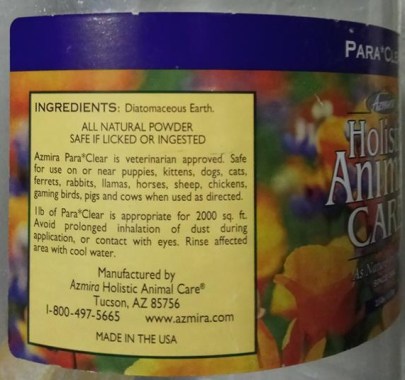
Another powerful and safe brand – but use with caution as it is quite strong! I would not recommend it on small birds!! – I have also used so far is Bio-X d’Bug (LIQUID NOT AEROSOL SPRAY) but it is rather expensive. This is a Singapore product, I am sorry to say that for overseas readers. Lovebirds and small birds may need to add on SCATT on top of a mite spray. You may choose to put in the nestbox a small amount of Diatomaceous Earth by Para*Clear however if you or your bird are sensitive to very fine particles then better not.

42361268_10156647100046303_5772678230439886848_n.jpg

I spray the bottom of my trays and then cover with newspaper, not necessarily on the birds. Not a fan of the perfumed smell getting on to them or so much inside them. Do ascertain if your birds have mites first, if you have one single bird from a good breeder and do not bring it out the likelihood of mites is lower. Do wash your nestboxes if acquired from a shop and wooden. I have lost count of how many nestboxes I bought that came with wood mites. If you can afford it, go for a metal nestbox. 


Do you need to deworm your birds?

Not necessarily unless you see worms in the feces. Some breeders give upon purchase as a precaution. I have given to my birds before and one pair of lovebirds refused to drink the water-based dewormer at all. 2 days later I noticed they were inactive and sickly and quickly changed to plain water whereby they drank in great dehydration.


A small note here. Friends and I have observed that Baxter brand cannot make it in terms of quality and effect.

And you can see breeding is not exactly cheap with the prices on the photos. There is the misconception that breeding is very profitable, sure it is if you mass-breed small birds or give the worst quality feed etc but when it is passion-based the profit margin can be negligible.


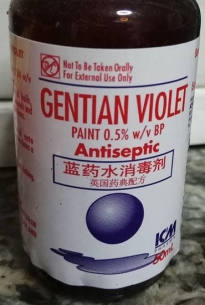
First aid items. Vet wrap for bandaging just in case of severe wounds. Betadine or the following purple liquid that we always got dipped in when we got hurt –

bluesolution.jpg beaphar.jpg

And indispensable is Beaphar’s Wound Ointment which I have found to work superbly on minor injuries. Along with a bag of cornstarch or flour to stop bleeding and Cayenne pepper as a painkiller.


21106328_10155589658726303_7438871123422736404_n

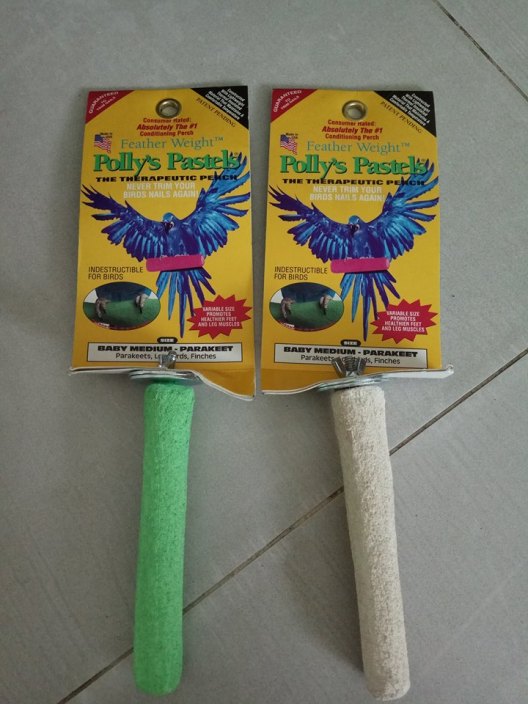
Polly’s concrete perches are the only pedicure perches that I use and have throughout the years found to be the most efficient. Yes it is very expensive but it works – and it works fast compared to say, Living World pedicure perches or those unbranded pumice and sandy perches. Safety is paramount…please do not use any unbranded perch simply because it is cheap. I despise sandy perches because birds can gnaw off the sand covering and I do not know if it is harmful if swallowed.

Take note to get the right size! Especially for lovebirds…their label recommendation is 1″ which is clearly too big for a lovebird and even in lovebirds – or any species – there is size variation (i.e Solomon Islands Eclectus begin with 1″ Polly’s perch but at full maturity may need 1.5″ diameter!). Polly’s perch will only work best if it is the appropriate size! I have also noticed it isn’t exactly indestructible…my lovebirds chewed off the edge of Polly’s Baby Small, much to my wallet’s great chagrin.

Why the importance of this perch aside from its efficiency? If your birds are not tame and their claws are overgrown you will stress them catching them out to trim them. Some birds may even stop producing for a while from fright. And you don’t want to have untame birds getting stuck from their long claws to the bars or some item in the cage – that has happened before and it was very stressful for both me and the bird as it was screaming non-stop!

You can only find Polly’s perches from Goodwill shop or from Birdsprees.com. I prefer to buy from shop because I can run my fingers on all the perches and choose one which I find to be not excessively rough. If you just buy online you cannot do that and it may come in an abominable colour that frightens your birds.


Wooden chewable toys. No string, no rope regardless of what ‘safe’ material it is made of. Chewing on destructible material may help stimulate birds to nest and in certain cases such as lovebirds they may carry off pieces to use in their box. I do not like acrylic or plastic pieces, nor round little wooden balls that may be hard to destroy or become a choking hazard.

If you do not give toys the birds may end up biting their wooden perches or may end up with some boredom-related habits. I have noted that sometimes birds also take out their frustrations from breeding on toys.


Selecting Or Acquiring A Pair


Now you’ll need the birds if you don’t already have them. Where to procure the pair? There are more horror stories than good endings. Everywhere seems to have pairs for sale. Shops, individuals…the list goes on. It is easier to just buy a pair from a shop right?

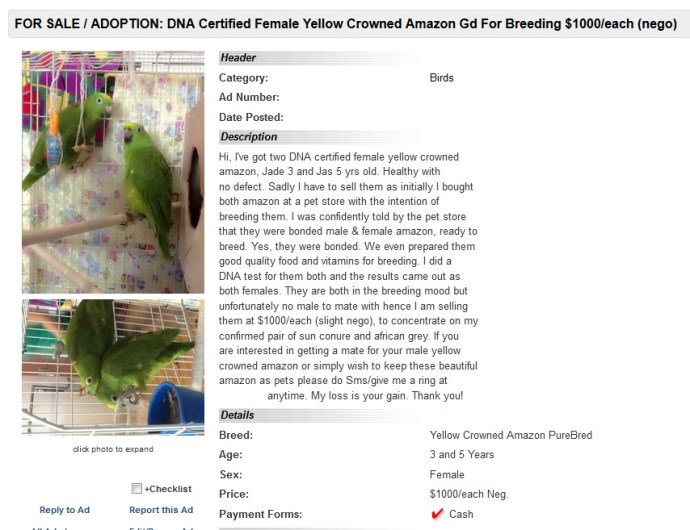
I came across this many years ago and saved it.

adpost1

To my knowledge this pair went round and round even landing in the hands of two friends until they were split. There was also a pair of Hawkheads and Crimson Bellied Conures that were same gender and went around.

Another friend of mine acquired two pairs of blue Quakers from a shop and they came with assurance that they were male and female. This friend was a long-time patron and thought it was alright to trust. A few years later when they did not breed, he had them DNA’ed and all of them were female!

I am not calling out shops as evil but do consider that end of the day business is business. Some people have succeeded with bonded pairs from shops.


Buying proven/breeding/bonded/just ‘pair’s.


You must be careful. People are very sly with their words nowadays.

  • Proven means the pair has produced babies before***(see further down)
  • Breeding may mean that they have produced before OR just means mature enough to breed. Always ASK. If the seller is evasive, run.
  • Bonded: Birds have not produced before but are bonded. Be wary that some sellers will say the birds are bonded when they are simply two single birds thrown together in a cage! Observe the birds or ask for sufficient proof that they are bonded!
  • Pair: Just a pair of birds. So vague that if the price is high you should re-consider especially if not DNA’ed.


Should you buy a proven, or just a mature and bonded pair, or pair them yourself?


I acquired two supposed proven pairs from shops. Both were Eclectus. Both pairs never bred and as I kept them for a while I observed that one pair’s female initiated mating but the male did not mount her. The other pair was a horrible mix of subspecies that led to inability to mate (I will discuss this in a future article). Both pairs were bonded but clearly had issues which may have led to them being sold in the first place.

Total damage: $2500 + $1800.

After all these years, I still recommend buying proven pairs over mature and bonded and not waste time pairing up from young. Seeing a proven pair produce will also encourage you greatly. Of course if you have the time to spare, the best results would be to pair two young birds and wait for them to mature. But who is able to see the future, you must consider the what-ifs should situations or plans change. There are also what I call childbirth pains – going through the various stages before maturity – that could be troublesome and sometimes hair-pulling.

Some people don’t believe in buying proven pairs as they have been cheated before. Understandable, but if you are very careful and once bitten twice shy, it can lead to acquiring good proven pairs.

Networking is very important. I made friends with a breeder whom I consider my mentor. When he had to let go his birds he contacted me and asked if I were keen on them. Good relations will lead to people notifying you first before releasing to open market. And if you are close to that breeder AND observant (these go hand in hand!) you will take note throughout time if that pair or those pairs are really producing pairs.

I acquired several pairs of birds from my mentor. All but one pair which I gave up very early (see post on breeding African Greys) produced in due course. I got to know also another Eclectus breeder and over one year, watched as his pair broke eggs repeatedly but finally after changing nestboxes and so forth they started breeding (they were bought as a proven pair! Proven does not mean the birds don’t have habits!).

When he gave up on breeding I took over that pair. There is a saying that good things must wait and I agree with that. Observe, learn and wait. I knew that pair had a history of breaking eggs but was willing to give them a shot. And given enough calcium, the hen never broke an egg with me.


Just a ‘pair’.


Watch out! The less information you are given, the further distance you should put between yourself and the birds! Either the owners are hiding something or they do not know or cannot be bothered. In this era where DNA services are readily available and affordable, if you run across someone giving up their pair that you cannot visually sex and they refuse to DNA test them you should be cautious. DNA tests actually help to rehome birds easier because people are more willing to pay vs the risk of getting a pair of the same gender.

Some species such as lovebirds and Greys you can guesstimate with good accuracy the sex of a bird. As far as possible try to get DNA tested birds. Certain species such as caiques and lovebirds CAN bond and mate with a same sex partner!

With regards to ‘just a pair’ birds, you need to take a big pinch or better still a whole bottle of salt. More often than not the true age of the birds are unknown too or randomly generated. Worst case they could be DNA tested but the same sex and therefore owner claims they are not tested and do not know if the pair is male and female.

How do you think those Amazons and Hawkheads passed from owner to owner? My dear reader, that is just the tip of the iceberg.


The world of breeding is filled with dark deeds and twisted morals. If you thought that the bird community and hobby is swamped with drama and politics already, then entering breeding is diving into a pit far, far worse.


Important!


***Do take note to ask in detail about proven pairs. Proven pairs could be just a pair that had produced fertile eggs but do not incubate their eggs as they were taken to be artificially incubated, or bad sitters. Or they could sit but never had a chance to feed their chicks if taken away upon hatch or a few days after hatch (as per my mentor did) or worse, do not know how to feed chicks. 

Make sure the entity whom you are acquiring the birds from have valid reasons for letting them go! The best pairs come from people who are aiming for larger species (and selling all existing birds) or a change of course in life and are quitting the hobby. You want to question why would anyone let go a good breeding pair unless it has, 1 – problems, 2 – they ran into trouble and most of the time it is the first.

Many people cannot wait for success or the birds developed habits or had habits they did not know upon purchase until later. Be wary if someone is only giving up one pair out of many pairs, perhaps that is the least productive or most problematic one.

Also very terribly, there are people who buy fertile eggs or very young chicks from others and pass them off as their own pairs’ offsprings! I know of a big breeder who bought chicks and eggs from a farm. Some of his pairs did produce later but still…pity the souls who bought his false proven pairs at high prices! One of my friends did and the pair produced in his hands shortly. The breeder was stunned and kept asking what did he feed and what was his setup like – and my friend immediately felt suspicious. If it were a proven pair why would such questions be asked?

Have I frightened you off purchasing proven pairs yet? The keyword is relationship.

~~~


I once acquired a pair of supposedly proven lovebirds from a friend I was not close to. I had seen her post photos of chicks and she assured me that the pair she was letting go was their parents. Oddly the collection point was not her place. But to give benefit of doubt in case she had been posting on behalf of someone all along I went and picked them up. Now because I trusted her – and assuming, y’know, friend… – I did not ask for proof. After I got the birds home, I noticed that they did not have signs of bonding, they did not feed nor preen each other even if they did enter the nestbox together. After a while I decided to stop keeping them.

Then the friend posted more photos of chicks later with the caption that they were from the same parents as the previous clutch! Instantly I knew something was wrong. If she had let go her pair to me, how could she have more babies – and claim they were from the same parents? Regardless, I did not bring the matter up to her but kept it within close friends until today, besides there was no point getting upset over a small sum. It was a great lesson.

Another friend acquired a pair of proven lovebirds off the Internet. This pair had two chicks in the nestbox so it looked authentic. In fact this is an old method of seeing if a pair is proven. Alas! The chicks were found dead in the following days, having starved to death. The seller had simply thrown two birds together with two innocent babies in an attempt to jack up the price. I had noticed this young man continually have pairs for sale but thought nothing of it until my friend was deceived.

Always, always do your research. Some people are just out to take advantage of others. Time will unravel everything.


Mature & Bonded/ Pairing Single Birds 

Some people are unwilling to pay so high for a proven pair and settle for mature and bonded or pair up two single birds. Significantly cheaper but time is money, friend. Granted there are no guarantees even with proven pairs however the chance of succeeding again is higher than a non-proven pair. Not to mention the what-ifs should the pair not bond or take half a decade…

If you acquire a proven single bird – that is, a bird that was one of a proven pair but for some reason lost its partner – the chances of success will be higher than pairing two non-proven birds. At least one party knows what to do.

Proven single birds still command a higher price than a non-proven bird. Most people refuse to pay but I for one would definitely go for it, once again provided that the bird’s history is comprehensive. Knowledge of the bird’s personality is an advantage here. Also the longer the bird has become single, the better chance of successfully bonding with a new partner.

There are the cons, a proven bird could get frustrated with its new mate not responding as a proven one would or simply frighten the other bird with upfront advances. Hence details on personality is important. Putting two aggressive birds together or one aggressive proven with a meek non-proven bird can be disastrous!

~

I also acquired two pairs of bonded Eclectus from individuals.

One of them was from a reputable breeder of mostly conures and small birds. This pair would be my first time buying a pair of Eclectus however I did ask if they were related and was assured they were not. With the reputation of the seller I thought things would be alright. But the birds had consecutive leg ring numbers.

It wasn’t until much later after I pointed my suspicions to my mentor who ran a check for me through his friend who worked at the farm they were from that it was confirmed that THE PAIR WERE SIBLINGS! A mutual friend of me and the seller advised me to give him benefit of doubt so I did – maybe he was equally clueless – another expensive lesson!

The other pair was from a friend. They were under 2 years young and had begun feeding each other. I was still not very knowledgeable then and took them on based on photos and some videos. But it became clear upon observation – an important part of breeding – that they were far from ready. I did not want to wait since I had older birds and they were largely Solomon subspecies and rehomed them.

Total cost: $1600 + $1450

~

Also a tale I heard from a friend – his friend had a pair of Eclectus that were together since young. But upon reaching 6 and 7 years of age, they suddenly decided they did not want to be mates and fought violently. While the details are not there for one to infer the cause it is still something for your consideration. I have also heard a similar story from my mentor, also Eclectus and I do not know if it is only particular to that species but Eclectus do choose their partners. I will again, go into detail on this in a later article.

And to reiterate, if you are buying a bonded or even proven pair make sure to get sufficient proof. A lot of sellers do not allow viewing nowadays, understandably, so be smart about asking.


Joint Ownerships

Sometimes we can’t keep the birds we want due to money and space constraints. Then people may choose to co-own a pair or a few pairs of birds for breeding. One party keeps the birds at their place and looks after them and any resulting chicks’ value is split between them. These are tricky partnerships and must be looked at from a business point of view. Trust and very good relations are needed for any joint venture to work out especially in breeding. Birds may not breed, problems may arise and friendships can be broken.

I did enter one joint ownership deal once. I liked this pair of so-called proven Eclectus pair from a shop but could not afford it. A friend wanted to breed too but did not know anything about them. He offered to jointly own them, he would pay first and I would keep them and he would supply vegetables from time to time.

Unfortunately that pair never bred, they were not even a proven pair in the first place (this I knew later from observation) and as the months went by I felt some pressure whenever my friend asked if they had anything. After I noted that they were not going to breed, I decided to buy over them to leave the deal and also to preserve relations. (This is where a lot of friendships break up because one party is not willing to sacrifice) Besides, I wanted the male to re-pair. We agreed on installments and eventually I paid him off with relief. No relations were lost here, he understood that proven pairs were not guaranteed to breed (Of course I did not tell him why they were not going to succeed).

In other friends I have seen parties enter joint ownership and end up foes after that. Arguments over who should get how much %, birds not breeding or problematic…the more parties involved (some pairs had plenty of owners!) the more risky it is. Doubly so if the person keeping the pair at their place had more than one pair of that same species. If trust is not enough other parties could accuse them of having chicks but passing it off as their own birds’ offspring.

It is usually not healthy financially nor relations-wise to be involved in such complicated deals so I suggest if you are going to jointly own a pair of birds to consider carefully. A plan B is always needed before partaking in one lest somehow the party keeping the birds is unable to keep them anymore.


Pets vs wild birds

There are two sides to this, some people want their pets to be future breeders or want their pair to be tame lest if need to sell they would command a higher price. The other party prefers wild birds as they are purportedly easier to breed.

I’m on the fence with this one. Both have their pros and cons.

Tame birds tend to be noisier. They may be more keen on human interaction (I will discuss this further in each species-specific future articles) than on producing. Tame birds are usually more clueless when it comes to mating or looking after young. But you can take tame birds out to play and sun them easier, still enjoy them as pets…

Wild birds are untouchable. Getting them to sun and bath can be a hair-pulling experience if they are bigger birds. And the majority will make a din if you got too near. But because they are wild birds and frightened, they tend to bond easier because they have a common enemy – you. Note that tame, handraised birds that became untame from lack of handling may also be clueless about raising young or knowing what to do.

I like wild-caught birds that have become semi-tame over the years of being kept by humans. Those are the best breeders in my opinion. They know that humans are not going to harm them and feel relatively comfortable to produce and yet retain the instinct to mate and look after young. And if they have to be rehomed they settle down quick.


The details you need to look out for in getting any bird or pair:

  • Claws. Ideally the less missing claws (especially on the male) the better. A bird missing a few claws can still mate but grip will not be as good as one who has all intact.
  • Eyes. Stay away from those that have eye problems especially if it is the male.
  • Pluckers. Plucked does not mean it is incapable of producing. In certain cases trial and error will be needed until success. Some pluckers are also the best producers.
  • Size. Make sure you get two birds of near equal size.
  • Leg rings if any. They are crucial to determining if the pair is related. Do not think that the chance is remote, Singapore is a very small country!


Bird rooms

Some people – including me, for now – have a room or balcony solely to keep birds. Not everyone has this privilege and not all species require one. Ideally if you can afford the space, a dedicated area to put pairs is advisable. Certain species particularly African Greys need that privacy. Both wild and tame birds may stop mating if you walked past them.

Some people choose to cover their birds’ cages for privacy. I find that in our weather it may be overkill and very hot. It is also not good to keep them in some constant darkness long term. Not to mention the dangers of birds chewing and swallowing or getting entangled in blankets.

One thing I like about having a space just for the birds is that cleaning is easier and also more healthy for us humans. I have for a period of time slept and stayed in the same room as the birds and I can tell you it is very detrimental to health. I cannot imagine how I was able to survive the bird dander. You may not see the dust but some time down the road you will notice your health going downhill. It is not worth sacrificing health for money or animals. This applies to sleeping with your pets regardless of winged or how many legged.

Take my word and just don’t do it. Rather if you can afford it, get a glass or partition for the room.


More to come, I have in mind to write about propagating Congo African Greys, a few subspecies of Eclectus and Blue-masked lovebirds along with a few snippets of other species I’ve had throughout the years.


Why did I write this, perhaps friends will ponder. Aren’t there risks that I should worry about? I did think on that and that may have been partial cause of the delay on this post – record shows I started in June – but I am at the tail end of this ‘career’. With a full-time job in addition to school, having chicks is more burden than blessing. I simply cannot commit the time anymore. This venture is not a shake leg thing.

The majority of my birds are with several trusted people now thankfully, so I can focus on life ahead. I expect to get some flak for sharing my experiences especially from those who breed simply for money.

But still I rather not prefer newbies get cheated or follow others blindly. I have seen people new to the hobby shoot to fame for being vocal or having large numbers of birds in a short while but end of the day experience teaches the most – and takes time.

~

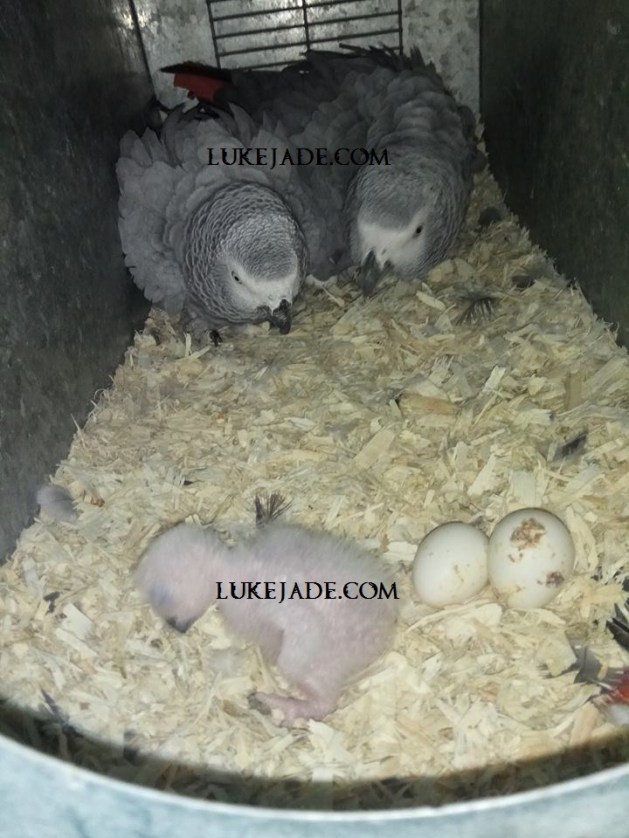
The photo of the chick in this post was my first baby. It’s parents were siblings. They laid many fertile eggs but only one made it to hatching, unsurprisingly. I loved this little baby but it did not survive past a few days likely due to inbreeding and my inexperience. That was in 2014 and it still hurts when I look at old photos because I love chickens.

Categories: Breeding | 2 Comments

Blog at WordPress.com.